Why Grand Rapids basements take on water
Much of the Grand Rapids area sits on heavy clay and clay-loam soil. Clay holds water and drains slowly, so after a hard rain the soil around your foundation stays saturated for days. Water collects in the gravel backfill next to the basement walls, pressure builds, and it finds the floor-wall joint, cracks or the drain tile that feeds your sump pit. Homes near the Grand River, Plaster Creek and Buck Creek, or in low spots, can also see the groundwater table rise high enough to push water up from below.
Spring is the hard season. Snowmelt and March and April rain arrive while the ground is still partly frozen, so water can't soak in and runs toward your house. Summer thunderstorms that drop an inch or more in an hour are the second big risk, and they often knock the power out at the same time.
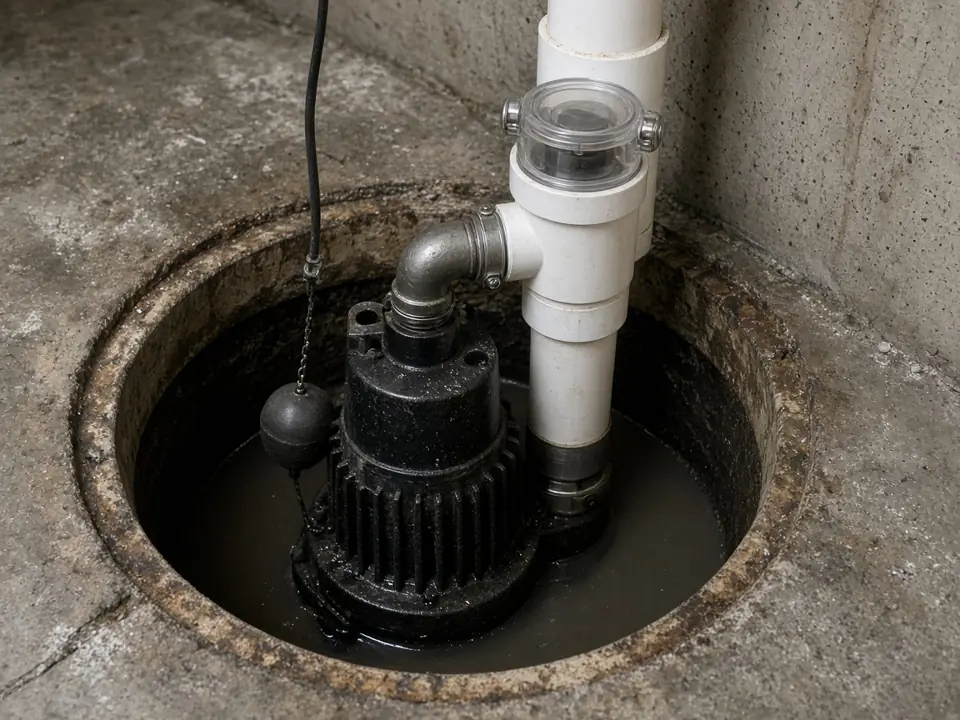
What we can connect you with
- New sump pump installation: a new pit, pump, check valve and discharge line for a basement that never had one.
- Sump pump repair and replacement: stuck floats, failed check valves, burned-out motors and pumps that are past their 7–10 year life.
- Battery backup sump pumps: protection for when the power goes out or the main pump fails.
- Wet basement and waterproofing: finding where the water is coming from and fixing it, from downspouts to interior drain tile.
Warning signs to act on now
- The pump runs nonstop, or cycles every minute or two in dry weather.
- It hums but no water leaves the pit, or you hear rattling or grinding.
- Water sits in the pit above the float and nothing happens.
- The pump is more than 7–10 years old, or you see rust and mineral crust on it.
- Damp walls, a musty smell, white powdery deposits (efflorescence) or water at the floor-wall joint.
How it works
Grand Rapids Sump Pump Pros isn't a contractor. When you call or fill out the form, we pass your request to an independent, locally licensed contractor serving Grand Rapids, Kentwood, Wyoming, Walker, Grandville and East Grand Rapids. They contact you, look at your basement and give you their own estimate. There's no charge for the referral, and you're never obligated to hire anyone.
Common questions
How much does a sump pump cost in Grand Rapids?
As a typical estimate, replacing a pump in an existing pit runs about $350–$900 installed, a brand-new pit and pump with discharge line about $1,500–$3,500, and a battery backup system about $800–$2,000 installed. Prices vary with pump quality, how hard the floor is to cut, and how far the discharge has to run, so get an on-site quote.
How long does a sump pump last?
Most pumps last about 7–10 years. Pumps in busy pits, which is common in West Michigan clay soil where groundwater collects around the foundation, can wear out sooner. If yours is 7+ years old and cycles often, plan a replacement before spring thaw rather than after it fails.
Why does my sump pump run so much in the spring?
In March and April, snowmelt and spring rain soak the ground while frost still sits a few inches down, so water can't soak in and flows toward your foundation. Clay soil drains slowly and the water table rises, so the pit fills over and over. Frequent cycling then is normal; running nonstop even in dry weather is not, and usually means a stuck float, a failed check valve, or an undersized pump.
Do I need a battery backup sump pump?
If a flooded basement would cost you real money (finished space, furnace, water heater, storage), yes. The worst storms are the ones most likely to knock out power, and that's exactly when the primary pump stops. A backup also covers you if the main pump fails mechanically.